Protimeter Concrete Humidity Probe Installation
 GE Protimeter depth-selectable humidity sleeves are designed for use with the Protimeter Hygrostick humidity probe. They can be used in combination with the Protimeter Hygromaster, MMS instrument and with the Protimeter Humilog monitoring system. Humidity sleeves improve and simplify the process of measuring the moisture level of solid walls, floors and structures in terms of equilibrium relative humidity (ERH). They are placed into pre-drilled clearance holes in the material under investigation.
This method can be used to carry out the ASTM F2170-02 Standard test method for determining relative humidity in floor slabs using IN SITU probes. |

Humidity Sleeve Features and ComponentsThe humidity sleeve is an impervious plastic tube of 12mm (15/32”) nominal diameter and 70mm (2¾”) overall length with a flange and sealing cap at one end. The tube is split into four sections separated by sealing rings. Each section has two recessed areas that can be "knocked out" to create windows through which air can circulate. Isolated humidity readings can be taken at four specific depths (15, 30, 45 and 60mm) below the surface by knocking out only the windows in the appropriate section. The humidity sleeve tool is used to knock out the windows and to drive the sleeve fully into the pre-drilled clearance holes. The tool should always be used for this purpose to ensure that the sleeve is not damaged during placement. |
Humidity Sleeve Placement Procedure
Dril Drill clearance holes at the measurement points using a 12mm (15/32”) drill bit to a depth of 85mm (3¼”) or more.
|
Taking Measurements in Humidity Sleeves

|

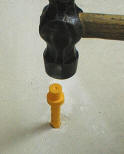 Remove all waste material from the holes. Insert the sleeve tool into the sleeve as shown and drive the sleeve into the clearance hole using a hammer. When placed correctly the underside of the sleeve flange should be touching the surface. Please note: ASTM F-2170-02 requires 3 sleeves test for the first 1000 ft2 and at least 1 sleeve test for every 1000 ft2 after.
Please read carefully
Prior to placement of the humidity sleeves, the actual test area shall be clean and free of all foreign substances. All residual adhesives, curing compounds, sealers,
paints, floor coverings, etc. shall be removed. Removal shall be accomplished using approved OSHA work practices. For removal of existing resilient floorings or residual adhesive, strictly observe Notes 1-3.
NOTE 1: Warning: Do not sand, dry sweep, dry scrape, drill, saw, beadblast, or mechanically chip or pulverize existing resilient flooring, backing, lining felt, or asphaltic cut-back adhesives. These products may contain either asbestos fibers or crystalline silica. Avoid creating dust. Inhalation of such dust is a cancer and respiratory tract hazard. Smoking by individuals exposed to asbestos fibers greatly increases the risk of serious bodily harm. Unless positively certain that the product contains non-asbestos material, presume it contains asbestos. Regulations may require that the material be tested to determine asbestos content. RFCI’s recommended work practices are a defined set of instructions addressed to the task of removing all resilient floor covering structures whether or not they contain asbestos. When RFCI’s recommended work practices are followed, resilient floor covering structures that contain (or are presumed to contain) asbestos can be removed in a manner that will comply with the current occupational exposure to asbestos standard’s permissible exposure limits (PEL) issued by the Occupational Safety and Health Administrations (OSHA).
NOTE 2: Various federal, state, and local government agencies have regulations covering the removal of asbestos-containing material. If considering the removal of resilient floor covering or asphaltic cut-back adhesive that contains or is presumed to contain asbestos, review and comply with the applicable regulations.
NOTE 3: Certain paints may contain lead. Exposure to excessive amounts of lead dust presents a health hazard. Refer to applicable federal, state, and local laws and “Lead-based Paint: Interim Guidelines for Hazard Identification and Abatement in Public and Indian Housing” 5 regarding: (1) appropriate methods for identifying lead-based paint and removing of such paint, and (2) any licensing, certification, and training requirements for persons performing lead abatement work. (Use only qualified of certified lead abatement contractors to remove lead-based paint.)