Who Should Do the Cleanup?
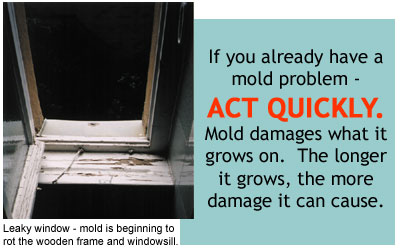
Cleanup depends on a number of factors. One consideration is the size of the mold problem. If the moldy area is less than about 10 square feet (little more than a 3 ft. by 3 ft. patch), in most cases, you can handle the job yourself, following the guidelines below. However:
- If there has been a lot of water damage, and/or mold growth covers more than 10 square feet, consult the U.S. Environmental Protection Agency (EPA) guide: Mold Remediation in Schools and Commercial Buildings. Although focused on schools and commercial buildings, this document is applicable to other building types.
- If you choose to hire a contractor (or other professional service provider) to do the cleanup, make sure the contractor has experience cleaning up mold. Check references and ask the contractor to follow the recommendations in EPA's Mold Remediation in Schools and Commercial Buildings, the guidelines of the American Conference of Governmental Industrial Hygenists (ACGIH), or other guidelines from professional or government organizations.
- If you suspect that the heating/ventilation/air conditioning (HVAC) system may be contaminated with mold (it is part of an identified moisture problem, for instance, or there is mold near the intake to the system), consult EPA's guide Should You Have the Air Ducts in Your Home Cleaned? before taking further action. Do not run the HVAC system if you know or suspect that it is contaminated with mold - it could spread mold throughout the building.
- If the water and/or mold damage was caused by sewage or other contaminated water, then call in a professional who has experience cleaning and fixing buildings damaged by contaminated water.
- If you have health concerns, consult a health professional before starting cleanup.