What to Wear When Cleaning Moldy Areas
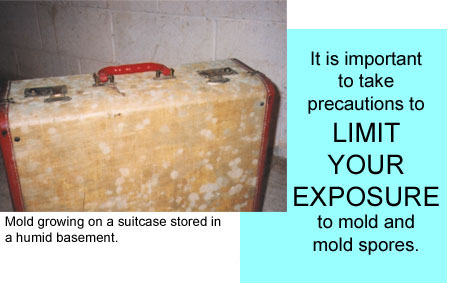
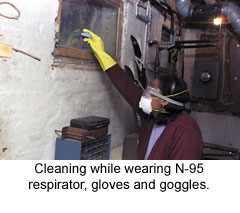
- Avoid breathing in mold or
mold spores. In order to limit your exposure to airborne
mold, you may want to wear an N-95 respirator, available at many
hardware stores and from companies that advertise on the Internet.
(They cost about $12 to $25.) Some N-95 respirators resemble a paper
dust mask with a nozzle on the front, others are made primarily of
plastic or rubber and have removable cartridges that trap most of the
mold spores from entering. In order to be effective, the respirator
or mask must fit properly, so carefully follow the instructions
supplied with the respirator. Please note that the Occupational
Safety and Health Administration (OSHA) requires that respirators fit
properly (fit testing) when used in an occupational setting; consult
OSHA for more information.
- Wear gloves. Long gloves that extend to the middle of the forearm are recommended. When working with water and a mild detergent, ordinary household rubber gloves may be used. If you are using a disinfectant, a biocide such as chlorine bleach, or a strong cleaning solution, you should select gloves made from natural rubber, neoprene, nitrile, polyurethane, or PVC. Avoid touching mold or moldy items with your bare hands.
- Wear goggles. Goggles that do not have ventilation holes are recommended. Avoid getting mold or mold spores in your eyes.
How Do I Know When the Remediation or Cleanup is Finished?
You must have completely fixed the water or moisture problem before the cleanup or remediation can be considered finished.
- You should have completed mold removal. Visible mold and moldy odors should not be present. Please note that mold may cause staining and cosmetic damage.
- You should have revisited the site(s) shortly after cleanup and it should show no signs of water damage or mold growth.
- People should have been able to occupy or re-occupy
the area without health complaints or physical symptoms.
- Ultimately, this is a judgment call; there is no easy answer.