Radon Gas is an Intruder

Radon is a naturally occurring gas produced by the breakdown of uranium in soil, rock, and water. Air pressure inside your home is usually lower than pressure in the soil around your home's foundation. Because of this difference in pressure, your house acts like a vacuum, drawing radon in through foundation cracks and other openings. Radon may also be present in well water and can be released into the air in your home when water is used for showering and other household uses. In most cases, radon entering the home through water is a small risk compared with radon entering your home from the soil. In a small number of homes, the building materials (e.g. stone, gravel, stone etc.) can give off radon, although building materials rarely cause radon problems by themselves.
How Radon gets into your home:
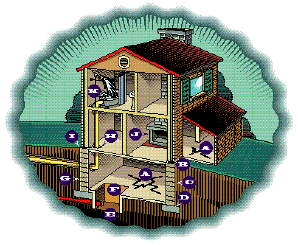
- Cracks in concrete slabs.
- Spaces behind brick veneer walls that rest on uncapped hollow-block foundation.
- Pores & cracks in concrete blocks.
- Floor-wall joints.
- Exposed soil, as in a sump.
- Weeping (drain) tile, if drained to open sump.
- Mortar joints.
- Loose fitting pipe penetrations.
- Open tops of block walls.
- Building materials (e.g. stone, gravel, stone etc.).
- Water (from some wells).
Find out how to test
your home for Radon. It is easy and inexpensive.
Order your test kit today to begin testing your home right away.
 After Testing: What to do if Your Home has High Levels of RADON
ALERT to
Home Buyers & Sellers
Another view of How Radon Enters the Home?
Typically the air pressure inside your home is lower than the pressure in the soil around your home's foundation. Due to this difference, your house acts like a vacuum, drawing radon gas in through foundation cracks and other openings of your home. Radon may also be present in well water and can be released into the air in your home when water is used for showering and other household uses.
Potential Entry Points:
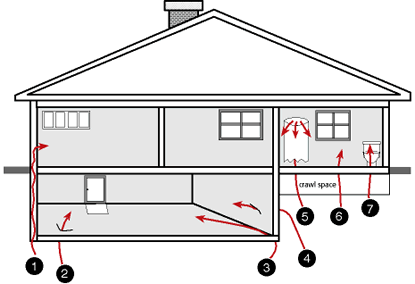
| 1 | Cavities inside walls | 2 | Cracks in solid floors | 3 | Construction joints |
| 4 | Cracks in walls | 5 | The water supply | 6 | Gaps in suspended floors |
| 7 | Gaps around service pipes |