UV Index Scale

The UV Index is a measure of the amount of ultraviolet (UV) radiation from the sun that reaches the Earths surface. The index ranges from 0 to 11+, with higher values indicating a greater risk of harm from unprotected sun exposure. The UV Index is used to help people plan their outdoor activities in a way that minimizes the risk of sun damage, such as sunburn, skin cancer, and cataracts. The UV Index can be found in weather forecasts and can also be measured with UV index sensors.
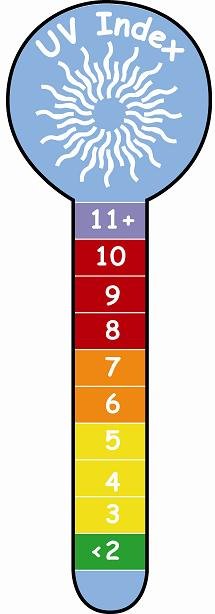
The UV Index uses a scale that ranges from 0 to 11+.

The levels of the scale are as follows:

Heat Index Chart

0 to 2 Low:
No protection needed. You can safely stay outside using minimal sun protection.

Heat Index Chart

3 to 5 Moderate: 
Consider Protection. Seek shade during late morning through mid-afternoon. When outside, generously apply broad-spectrum SPF-15 or higher sunscreen on exposed skin, and wear protective clothing, a wide-brimmed hat, and sunglasses.

Heat Index Chart

6 to 7 High:
Protection needed. Seek shade. When outside, generously apply broad-spectrum SPF-15 or higher sunscreen on exposed skin, and wear protective clothing, a wide-brimmed hat, and sunglasses.

Heat Index Chart

8 to 10 Very High:
Extra protection needed. Be careful outside, especially during late morning through mid-afternoon. If your shadow is shorter than you, seek shade and wear protective clothing, a wide-brimmed hat, and sunglasses and generously apply a minimum of SPF-15, broad-spectrum sunscreen on exposed skin.

Heat Index Chart

11+: EXTREME
Time to go indoors and take shelter from direct and inderect sun.

Heat Index Meters

The Shadow Rule:
An easy way to tell how much UV exposure you are getting is to look for your shadow:

  • If your shadow is taller than you are (in the early morning and late afternoon), your UV exposure is likely to be lower.
  • If your shadow is shorter than you are (around midday), you are being exposed to higher levels of UV radiation. Seek shade and protect your skin and eyes.
The risk of harm from unprotected sun exposure increases as the UV Index value goes up. Low values (0-2) indicate a minimal risk, while extreme values (11+) indicate a very high risk.

It's important to note that risk factors such as sun sensitivity and the time of day can affect the actual risk of harm. The UV Index provides a general guide to the level of UV radiation, but it's not a direct measure of the amount of UV radiation that a person is exposed to.

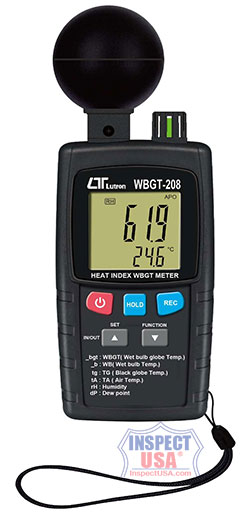
A WBGT Heat Index Meter like this one, is used in sports, military and training events to measure and alert of critical heat index levels.  

Also, it is important to use sun protective measures such as sunblock, sunglasses, hats and protective clothing when the UV index is high.