Meters, Test Kits, Inspection Supplies & Tools!
 Discontinued
Duct Smoke Detector 4-Wire (SL-2000P) Photoelectric Sensor
Reference only — not for sale
| Model | SL-2000p |
|---|---|
| Manufacturer | Air Products-Controls |
| Category | Fire and Smoke Safety |
| Status | Discontinued |
Product details (archived)
The information below is retained for reference only. This item is discontinued and cannot be ordered.
The SL-2000p Photoelectric Conventional Duct Detector
The latest innovation for early detection of smoke and products of combustion present in air moving through HVAC ducts in Commercial, Industrial, and Residential applications. The unit is designed to prevent the recirculation or spread of smoke by air handling systems, fans and blowers. Complete systems may be shut down in the event of smoke detection.
The SL-2000 is designed and built to meet all local code requirements, as well as the NFPA and ICC standards regarding HVAC supply and return duct smoke detectors. Output terminals are provided for a wide range of remote accessories such as horns, strobes, remote status indicators, and test/reset key switches or push buttons.
- Low-Flow Technology: listed for velocities between 100 to 4,000 FPM, feet per minute.
- Listed for high-temperature applications.
- Operating voltages: 230VAC, 115VAC, 24VAC, 24VDC.
- Interconnect up to 30 units for common functions.
- Patent pending "No-Tools Required" front or rear loading and removing sampling/exhaust tubes.
- Patent pending "Test Port Valve" allows for aerosol smoke testing without cover removal.
- Magnet test capability (magnet included).
- More wiring space than competitive models.
- Compatible with the WP-2000 weatherproof enclosure.
- Reset switch is also an alarm test switch - competitive models require a magnet or cover removal to test at unit.
- UL, CUL, CSFM, and MEA Listed.
- Two sets of 10A form "C" alarm contacts.
- One set of 2A form "A" alarm contacts.
- One set of 10A form "C" trouble contacts.
- Standard interchangeable "plug-in" UL268 photoelectric or ionization heads.

Available replacements in Fire and Smoke Safety
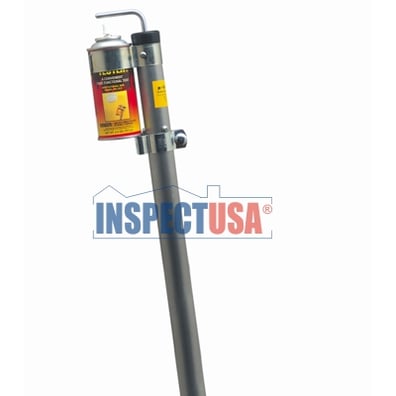
Open Delivery Aluminum Test Extends 30" (N-30) Trigger Device
$237.60 now $198.00
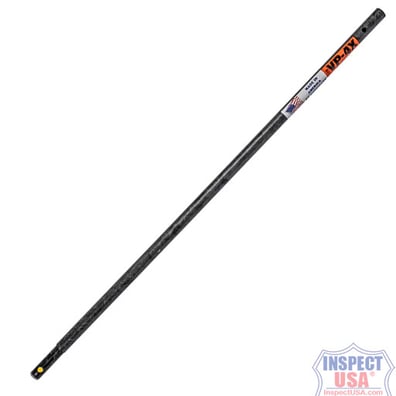 Limited QtyOnly 2 remain
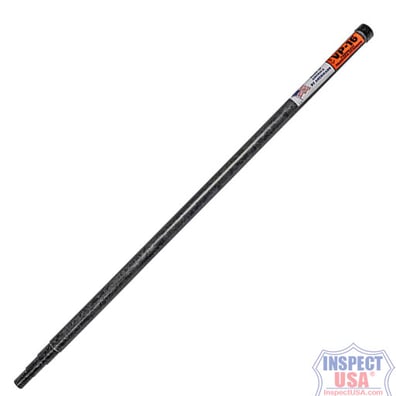
Extension Pole 4 Foot (VP-4X) Fiberglass
$225.90 now $144.00
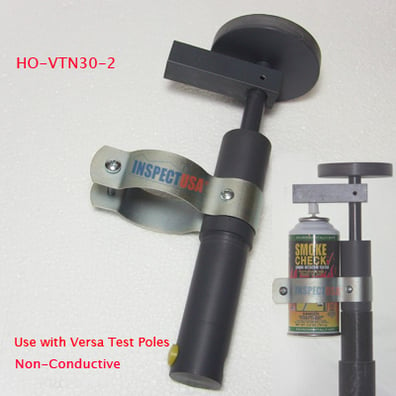
Open Delivery Non-Conductive Test Head (VT-N30-2)
$225.00 now $198.00
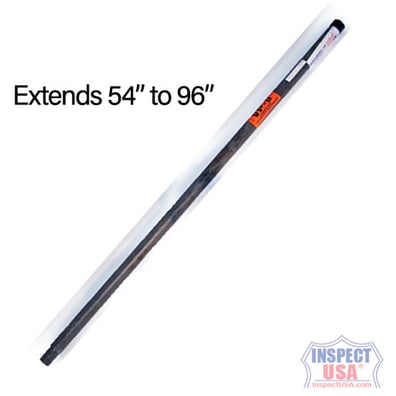
Versa-Test 54" to 96" Extension Pole (VP-8) Fiberglass
$339.00 now $270.00
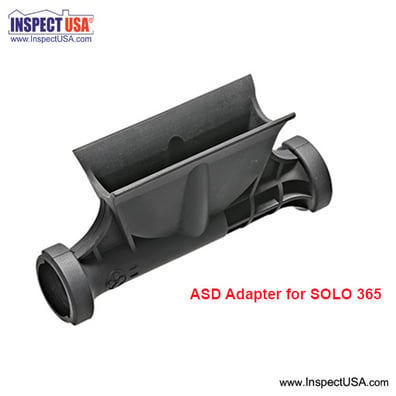
Solo 372 ASD Adapter for SOLO-365 Test Head
$209.70 now $79.20