Meters, Test Kits, Inspection Supplies & Tools!
What Is Air Duct Cleaning?
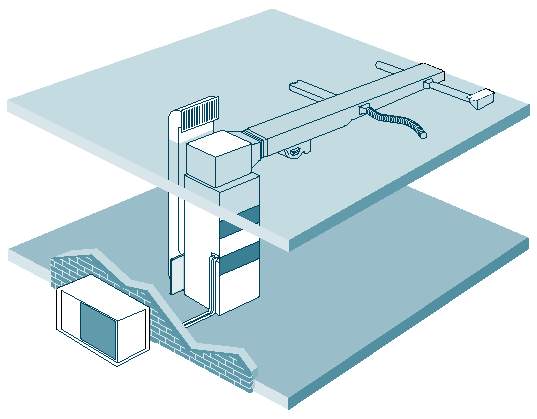
A Typical Residential Heating and Cooling System
What Is Air Duct Cleaning?
Indoor air pollution has become an increasingly recognized concern. Many companies now market products and services that claim to improve indoor air quality, including residential air duct cleaning. These services typically cost between $450 and $1,000 per system, depending on system size, accessibility, contamination levels, and geographic region.
Air duct cleaning generally refers to the cleaning of various heating and cooling components in forced-air HVAC systems, including:
- Supply and return ducts
- Registers, grilles, and diffusers
- Heat exchangers
- Heating and cooling coils
- Condensate drain pans
- Fan motors and housings
- Air-handling unit housings
If these components are not properly installed, maintained, or operated, they may become contaminated with dust, pollen, or debris. When moisture is present, microbiological growth (such as mold) may develop, releasing spores into the home’s living spaces. If you choose to have your HVAC system cleaned, it is critical that the service provider agrees to clean all components, since leaving one contaminated section can re-contaminate the entire system.
Most providers use specialized tools to dislodge dirt and debris, combined with high-powered vacuum extraction. Some may propose chemical biocides or sealants applied to duct surfaces—however, these practices remain insufficiently researched. Homeowners should be fully informed before agreeing to chemical treatments.
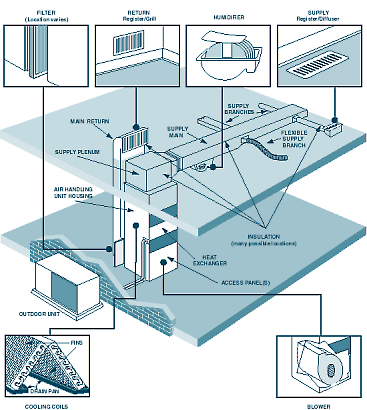
Upright Indoor System with Gas Furnace
System types, sizes, positions, and component locations vary.
Deciding Whether or Not to Have Your Air Ducts Cleaned
Because homes differ greatly in HVAC usage, layout, and environmental conditions, it is difficult to generalize whether duct cleaning is beneficial. Knowledge about the advantages and limitations of air duct cleaning remains limited.
If no one in your household suffers from allergies or unexplained illnesses and a visual inspection of the ducts shows no sign of mold, contaminants, or heavy debris, duct cleaning is likely unnecessary. Dust on return registers is normal and does not indicate contamination—registers can simply be vacuumed or cleaned manually.
If household members experience unexplained symptoms that you suspect may be related to your indoor environment, discuss the situation with your doctor. EPA publishes several helpful indoor air quality guides at epa.gov.
Some homeowners choose duct cleaning because it “feels logical,” and while proper duct cleaning is generally safe, improper cleaning can worsen indoor air quality. For example, an inadequate vacuum system can release more dust and debris into the home than if the ducts were left alone.
You should consider duct cleaning if:
- There is visible mold growing inside ducts or on HVAC components.
- The system is infested with vermin such as rodents or insects.
- Ducts are clogged with excessive dust and debris.
- Particles are being released into the home from supply registers.
Other Important Considerations
Air duct cleaning has not been scientifically proven to prevent health issues. Studies do not conclusively show that particle levels inside homes increase due to dirty ducts or decrease after cleaning. Much of the dust that accumulates inside air ducts adheres to duct surfaces and does not enter the living space.
Everyday household activities—cooking, cleaning, smoking, using fireplaces, or simply moving around—produce far greater particulate exposure than typical duct conditions. A light level of dust or debris inside ductwork is normal and does not pose a known health risk.
EPA does not recommend routine duct cleaning. They recommend cleaning only when there is visible contamination or other specific problems. If a contractor claims that “EPA recommends regular duct cleaning,” you should consider this a red flag and notify EPA.
Cleaning dirty cooling coils, fans, and heat exchangers may improve HVAC efficiency, but cleaning the duct system alone has not been proven to improve efficiency.
If you are unsure whether duct cleaning is appropriate, speak with your HVAC service provider or consult reputable local duct cleaning companies. Keep in mind they are selling a service—ask questions, verify answers, and require clear explanations.
Choosing a Duct Cleaning Service Provider
To find duct cleaning companies in your area, check online listings or search “duct cleaning” in your local directory. Do not assume all companies possess the same level of training or professionalism. Speak with at least three different service providers and get written estimates before deciding whether to proceed.
When contractors visit your home, ask them to show you the contamination that justifies cleaning. A reputable provider will be willing to show photographic or physical evidence.
• Make broad, unsubstantiated claims about health benefits
• Claim to be “EPA certified” — EPA does not certify duct cleaners
• Recommend routine cleaning “every year” without evidence
• Use scare tactics such as “your family is breathing dangerous mold”
Ask providers about experience working on systems similar to yours, what cleaning methods they use, and how they will protect your home from contamination. Request references and contact previous customers.
Licensing Requirements
As of the latest documented guidance, some states require special licensing for air duct cleaners, including:
- Arizona
- Arkansas
- California
- Florida
- Georgia
- Michigan
- Texas
Other states may require specific HVAC or mechanical licensing as well.
Questions to Ask Before Hiring
- How long have you been cleaning ducts?
- Are you familiar with my type of HVAC system?
- What standards do you follow—NADCA, NAIMA, or others?
- What equipment will you use? (Look for HEPA vacuums or outdoor-exhaust vacuums.)
- How will you protect my home and furnishings?
- How long will the job take?
- Will there be any interruption to heating or cooling?
- Can you provide a written estimate and scope of work?
If a contractor charges by the hour, request an estimate of the total time required, including any breaks or interruptions. A reputable provider will give you a written agreement detailing total cost, procedures, and expectations.
What to Expect From a Duct Cleaning Service Provider
If you choose to have your HVAC system cleaned, the provider should adhere to industry standards and follow procedures that protect your home and system. A professional duct cleaning service should:
- Open access ports or doors to inspect and fully clean the system
- Check for asbestos-containing materials before cleaning
- Use vacuum equipment that exhausts outdoors or uses true HEPA filtration
- Protect carpets, furniture, and household items during cleaning
- Use controlled brushing combined with contact vacuuming to remove debris
- Use soft-bristle brushes on fiberglass-lined ducts
- Seal and reinsulate any access holes created during service
- Follow NADCA and NAIMA recommended standards
If your duct system is made of flexible duct, duct board, or internally insulated with fiberglass, the provider must follow specific handling procedures to avoid damage.
How to Determine if the Duct Cleaner Did a Thorough Job
The best way to verify that your HVAC system was properly cleaned is through a thorough visual inspection. Many providers use remote cameras or photos to document conditions inside ducts before and after cleaning.
All components should be visibly clean and free from debris. You should not be able to detect dust or particulate buildup with the naked eye. Before work begins, show the contractor the Post-Cleaning Consumer Checklist, and insist that all checklist items are met once the job is completed.
If you answer “No” to any checklist item, ask the provider to correct the issue before considering the job complete.
| Post-Cleaning Consumer Checklist | Yes | No | |
|---|---|---|---|
| General | Did the provider obtain access to and clean the entire HVAC system, including all ducts and components? | ||
| Has the provider demonstrated that ductwork and plenums are clean? | |||
| Heating | Is the heat exchanger surface visibly clean? | ||
| Cooling Components | Are both sides of the cooling coil visibly clean? | ||
| If a flashlight shines through the coil, can light pass through the fins (a sign of cleanliness)? | |||
| Are coil fins straight and evenly spaced? | |||
| Is the coil drain pan completely clean and draining properly? | |||
| Blower | Are blower blades clean and free of oil and debris? | ||
| Is the blower compartment clean and free of dust or debris? | |||
| Plenums | Is the return air plenum free of visible dust or debris? | ||
| Do air filters fit properly and meet manufacturer efficiency recommendations? | |||
| Is the supply air plenum free of moisture stains or contaminants? | |||
| Metal Ducts | Are interior surfaces free of visible debris? (Check multiple supply and return locations.) | ||
| Fiberglass | Is all fiberglass insulation in good condition (no tears, abrasions, or loose areas)? | ||
| Access Doors | Are new access doors securely attached (e.g., screws, rivets, mastic), not just taped? | ||
| With the system running, is air leakage around access doors minimal or nonexistent? | |||
| Air Vents | Are all registers, grilles, and diffusers firmly reattached after cleaning? | ||
| Are all vents visibly clean? | |||
| System Operation | Does the HVAC system operate properly in heating and cooling modes after cleaning? | ||
Preventive Maintenance to Reduce Duct Contamination
Whether or not you choose to have your ducts cleaned, a solid preventative maintenance program helps keep your HVAC system clean and efficient.
To prevent dirt from entering the system:
- Use the highest-efficiency air filter recommended by your HVAC manufacturer.
- Change filters regularly.
- If filters clog frequently, replace them more often.
- Ensure no filters are missing and that air cannot bypass filter frames.
- Ask service technicians to clean cooling coils and drain pans during routine HVAC service.
- Seal off supply and return registers during home renovation or construction.
- Dust and vacuum your home regularly using HEPA-rated vacuums.
- Maintain any in-duct humidification equipment according to manufacturer instructions.
To prevent ducts from becoming wet:
Moisture should never be present in air ducts. It is the primary cause of mold growth and biological contamination.
- Repair water leaks or damage promptly and completely.
- Pay special attention to cooling coils—ensure condensate pans drain properly.
- Inspect insulation near cooling coils for wet or damp areas.
- Ensure ducts in non-conditioned areas (attics, crawl spaces) are properly sealed and insulated.
- Prevent condensation by ensuring the system is properly insulated and functioning correctly.
Unresolved Issues of Duct Cleaning
Does duct cleaning prevent health problems?
The short answer: no one knows. While some HVAC systems become heavily contaminated with substances that may pose health risks, many systems contain only normal household dust. In contaminated systems, duct cleaning may make sense. But in most homes, a light layer of dust in ductwork is common and is not considered harmful.
Duct cleaning is not considered part of routine HVAC maintenance. Standard maintenance includes:
- Cleaning cooling coils and drain pans
- Changing filters regularly
- Inspecting heating components annually
Research continues to evaluate the possible health and efficiency benefits of duct cleaning, but currently the evidence remains inconclusive.
In the meantime…
Are certain duct materials more prone to mold and contamination?
Many older homes use bare sheet metal ducts, but modern residential systems often include materials such as:
- Fiber glass duct board
- Sheet metal ducts lined internally with fiber glass
- Flexible duct (typically lined with plastic films or insulation)
These insulated duct materials became popular due to better temperature control, energy efficiency, noise reduction, and lower cost. All duct materials used today are tested against standards by UL, ASTM, and NFPA.
Many insulated duct systems have operated for years without significant mold growth. Keeping them clean and dry is generally sufficient. However, experts debate whether porous insulation (like fiber glass) is more prone to microbial contamination than bare metal.
If dirt and moisture enter the duct system, both bare sheet metal and insulated ducts may support mold growth. The difference is:
- Bare sheet metal: can be cleaned and treated with EPA-registered biocides.
- Fiberglass-lined ducts: cannot be effectively cleaned once moldy.
In the meantime…
- Prevent moisture from entering any type of duct system.
- Repair water leaks promptly.
- Keep condensate pans clean and draining properly.
- Maintain humidifiers per manufacturer instructions.
- Replace any wet or moldy insulation materials; do not attempt to clean or salvage them.
- Avoid steam cleaning or wet-cleaning methods on any type of ductwork.
Should chemical biocides be used inside air ducts?
Some duct cleaners may claim that biocides (products designed to kill bacteria, fungi, or mold) should be applied inside ductwork to prevent future growth. Others may claim that ozone should be introduced to kill biological contaminants.
Potential problems with using biocides or ozone:
- Research is limited and does not conclusively demonstrate effectiveness inside duct systems.
- Spraying biocides into an operating duct system may allow chemicals to circulate throughout the home.
- Some people may experience adverse reactions or sensitivity to these chemicals.
- Directions on product labels may be unsuitable for ducts (e.g., “rinse with water”).
Biocides are regulated by the EPA under federal pesticide law. Products must be registered for a specific use before they can be legally applied for that purpose.
Only a small number of products are registered for use inside unlined sheet metal ducts. No products are registered for use on fiberglass duct liner or duct board.
In the meantime…
Before allowing any biocide treatment inside ducts, the service provider should:
- Show visible evidence of microbial growth. Settling plates or petri dish demonstrations are not reliable and do not prove duct contamination.
- Explain why growth cannot be removed by physical cleaning alone.
If you permit the use of a biocide, the provider should:
- Show you the product label and approved uses.
- Apply it only to uninsulated metal ducts after cleaning.
- Follow label directions precisely.
Do sealants prevent dust and debris from entering indoor air?
Some providers claim that sealants—sprayed inside ducts—prevent dirt and dust particles from entering the air. However, research is limited, and these products remain controversial.
Laboratory testing shows that spray-applied sealants may not fully coat duct surfaces. They may also alter fire-retardant properties or acoustic performance of fiberglass-lined ductwork.
Sealants have not been fully evaluated for long-term durability or potential toxicity, particularly if exposed to heat or fire.
In the meantime…
Sealants may be appropriate only in limited cases, such as:
- Repairing damaged fiberglass insulation
- Combating fire damage inside ducts
Sealants should never be applied to:
- Wet duct liner
- Actively moldy surfaces
- Debris-covered duct interiors
Sealants should only be used after cleaning and only when specified by recognized duct cleaning standards (e.g., NADCA).
To Learn More About Indoor Air Quality
U.S. Environmental Protection Agency
Office of Radiation and Indoor Air
Indoor Environments Division (6609J)
Ariel Rios Building
1200 Pennsylvania Avenue, N.W.
Washington, DC 20460
Phone: (202) 564-9370
Indoor Air Quality Information Clearinghouse (IAQ INFO)
P.O. Box 37133
Washington, DC 20013-7133
Toll-Free: 1 (800) 438-4318
Local: (703) 356-4020
Fax: (703) 356-5386
EPA publications, including this guidance, are available online at:
https://www.epa.gov/iaq/pubs
- The Inside Story: A Guide to Indoor Air Quality — EPA 402-K-93-007
- Indoor Air Pollution: An Introduction for Health Professionals — EPA 402-R-94-007
- Residential Air Cleaning Devices: A Summary of Available Information — EPA 4001-90-002
- Ozone Generators That Are Sold as Air Cleaners (online only)
National Air Duct Cleaners Association (NADCA)
1518 K Street, NW Suite 503
Washington, DC 20005
Phone: (202) 737-2926
Website: www.nadca.com
Ask for: Introduction to HVAC System Cleaning Services
North American Insulation Manufacturers Association (NAIMA)
44 Canal Center Plaza, Suite 310
Alexandria, VA 22314
Phone: (703) 684-0084
Website: www.naima.org
Ask for: Cleaning Fibrous Glass Insulated Air Duct Systems; Recommended Practice
Other Useful Resources
Consumer’s Resource Handbook
Consumer Information Center
Pueblo, CO 81009
Consumer Checklist
Use this checklist before hiring a service provider and after the job is completed.

|
Learn as much as possible about air duct cleaning before scheduling service. |
|
|
Consider other indoor air quality problems first—ducts may not be the source. |
|
|
Have ducts cleaned only when mold, pests, or heavy debris are visibly present. |
|
|
Ask providers to show any biological contamination they claim exists. |
|
|
Get at least three written estimates before hiring anyone. |
|
|
Check references from previous customers. |
|
|
Verify any required state or local licenses are valid and current. |
|
|
Insist that all questions are answered clearly and completely. |
|
|
Identify duct materials in your home (sheet metal, flex duct, fiberglass-lined). |
|
|
Permit biocide use only when necessary and only after proper cleaning. |
|
|
Do not allow sealants except in rare, justified situations. |
|
|
Ensure providers follow NADCA and NAIMA standards where applicable. |
|
|
Commit to preventative maintenance: yearly inspections, filter changes, and moisture control. |
By educating yourself, asking the right questions, and choosing qualified professionals, you can make informed decisions about air duct cleaning and indoor air quality in your home.